
Stretching, Yoga & Pilates: The Missing Link in Men’s Fitness
Updated: Mar 26

Walk into most gyms and you’ll see a familiar pattern.
Men clustered around squat racks.
Bench presses loaded with plates.
Treadmills pounding with runners chasing a faster 5K.
But in the corner of the studio, often quieter, there’s another group.
People stretching.
Moving slowly.
Practising yoga or Pilates.
And historically, it’s been mostly women.
For many men, flexibility and mobility training has long been seen as optional. Even worse, it’s sometimes viewed as something that’s “not really training.”
But that perception is rapidly changing.
Elite athletes, professional footballers, Olympic runners, and strength coaches now agree on something that used to be overlooked:
Strength without mobility eventually leads to injury.
Stretching, yoga and Pilates may be the missing piece in many men’s fitness routines, particularly for those who lift weights, run regularly, or spend long hours sitting at a desk.
And the good news is that you don’t need to become a yoga master or attend hour-long classes every day to benefit.
Small, consistent changes can make a huge difference.
Why Flexibility Matters More Than You Think
Muscles don’t operate in isolation. They are part of an integrated system involving joints, connective tissue, nerves and movement patterns. When flexibility and mobility are limited, several problems begin to develop.

1. Reduced range of motion
Tight muscles restrict joint movement. This means exercises such as squats, lunges and overhead presses may place strain on surrounding structures.
2. Compensation patterns
When one muscle group is tight, the body compensates by overusing another. Over time this creates imbalance and injury risk.
3. Reduced performance
Mobility allows muscles to generate power through a full range of motion. Without it, strength gains plateau.
4. Increased injury risk
Tight hamstrings, hip flexors and calves are strongly linked to common injuries including:
Hamstring strains
Achilles problems
Lower back pain
Knee pain
For men who train hard but rarely stretch, this combination can quietly build up over years.
Often the first sign is a persistent niggle that never quite goes away.
The Modern Male Problem: Sitting Too Much
Even very active men often spend large parts of the day sitting.
Office work, commuting, driving and screen time mean that many people sit 8–10 hours per day. This creates a predictable pattern of muscle tightness:
Common office-related tightness
Area | Cause | Result |
Hip flexors | Sitting with hips flexed | Lower back strain |
Hamstrings | Limited extension | Reduced mobility |
Thoracic spine | Rounded shoulders | Neck and upper back pain |
Glutes | Under-activation | Poor hip stability |

The result is what many physiotherapists call “modern posture syndrome.”
You might recognise the signs:
Tight hips during squats
Lower back stiffness after sitting
Shoulder discomfort during pressing exercises
Difficulty touching your toes
Stretching and mobility work directly counteract these patterns.
Why Many Men Avoid Stretching
Despite the benefits, many men still skip mobility training.
Common reasons include:
“I don’t have time.” Strength and cardio often take priority.
“I’m not flexible enough.” Ironically, this is precisely why stretching is helpful.
“Yoga isn’t for me.” Many assume it’s slow, gentle or spiritual rather than athletic.
“It doesn’t feel like a workout.” But flexibility training isn’t about burning calories.
It’s about maintaining a body that can keep training for decades.
Professional athletes understand this well. Elite footballers, rugby players and Olympic runners often spend as much time on mobility work as they do on strength training.
Stretching: The Simple Foundation
Stretching is the most accessible place to start.
Even 10 minutes per day can significantly improve mobility over time.
There are two main types.
Static stretching
This involves holding a stretch for 20–60 seconds.
Examples include:
Hamstring stretch
Hip flexor stretch
Chest opener
Calf stretch

Static stretching works best after exercise or in the evening when muscles are warm.
Dynamic stretching
Dynamic stretches involve controlled movement through range of motion.
Examples include:
Leg swings
Arm circles
Walking lunges
Hip openers
These are ideal before exercise to prepare the body for movement.
A combination of both is ideal for most people.
Yoga: Strength Through Mobility
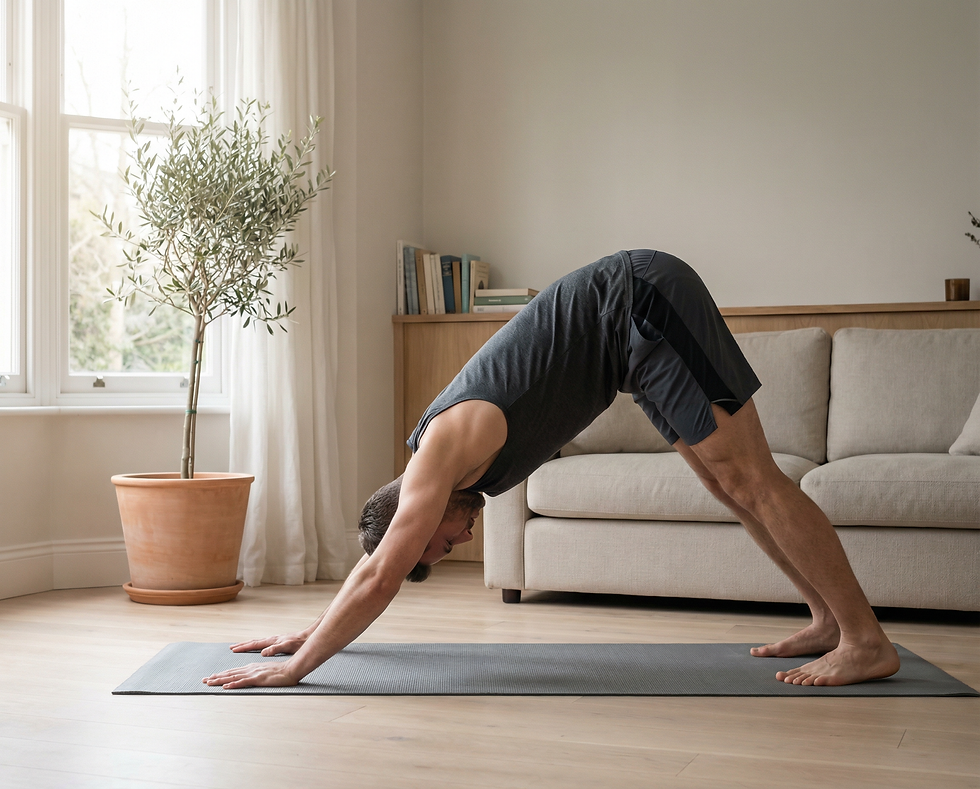
Yoga is sometimes misunderstood. While some forms focus on relaxation, many styles are physically demanding and build both strength and flexibility.
Popular modern styles include:
Vinyasa yoga – flowing movement sequences
Power yoga – strength-focused and athletic
Hatha yoga – slower and more structured
For men who lift weights or run, yoga offers several key benefits.
Improved hip mobility
Many yoga poses target the hips - an area that becomes tight from both lifting and sitting.
Better spinal mobility
Yoga encourages movement through the entire spine, helping reduce stiffness.
Core strength
Many poses require deep stabilising muscles to engage.
Improved recovery
The slower pace can also help reduce stress and support recovery between training sessions.
Many professional athletes now include yoga sessions in their weekly routines for precisely these reasons.
Pilates: The Core Strength Secret

Pilates is another practice that has historically been more popular with women but is increasingly used by athletes. It was actually developed by Joseph Pilates, a physical trainer who designed the system for rehabilitation and strength.
The focus of Pilates is core stability and controlled movement.
This includes strengthening:
Deep abdominal muscles
Pelvic floor
Lower back stabilisers
Hip stabilisers
These muscles are essential for protecting the spine and for men who lift weights, run long distances or play high-impact sports, Pilates can be extremely valuable.
Many physiotherapists recommend it for preventing and managing lower back pain.
A stronger core helps distribute load more evenly across the body and improves posture during both exercise and daily life.
Injury Prevention: The Long-Term Advantage
Most men focus on performance. Running faster. Lifting heavier. Training harder. But long-term fitness depends just as much on avoiding injury. Many common sports injuries are linked to poor mobility.

Examples include:
Tight hip flexors contributing to lower back pain
Tight calves increasing Achilles strain
Restricted ankle mobility affecting squat mechanics
Poor thoracic mobility affecting shoulder health
Stretching and mobility work help maintain healthy movement patterns. This reduces the stress placed on joints and connective tissue during training. Think of it as preventive maintenance for the body. Just as you service a car regularly to avoid breakdowns, mobility work keeps the body functioning smoothly.
Mental Benefits Many Men Don’t Expect
One benefit that often surprises people is the mental effect.
Slower forms of movement such as yoga and Pilates encourage:
Controlled breathing
Focused attention
Reduced stress levels
This can counterbalance the high intensity of modern life. For men juggling work, training and family responsibilities, this can provide an important moment of calm.
Some people describe yoga as “active recovery for the mind.”
How to Add Mobility to Your Routine
The biggest barrier for most people is simply getting started.
The good news is that you don’t need to overhaul your entire training schedule.
Small additions can have a significant effect.
Option 1: 10-minute daily mobility routine
Focus on key areas:
Hamstrings
Hip flexors
Glutes
Thoracic spine
Shoulders
Option 2: Add stretching after workouts
Spend 5–10 minutes stretching the muscles you trained.
Option 3: Weekly yoga session
Even one class per week can improve mobility.
Option 4: Pilates for core stability
A weekly Pilates session can strengthen the muscles that protect the spine.
Consistency matters far more than intensity and a few minutes most days will outperform occasional long sessions.

The Flexibility Myth
One of the biggest misconceptions is that flexibility requires natural talent. In reality, flexibility improves gradually with regular practice.
You don’t need to touch your toes on day one.
What matters is simply moving regularly through your available range of motion. Over time the body adapts. Muscles lengthen, joints move more freely, and movement becomes smoother. Many people begin noticing improvements within just a few weeks.
A New Era of Smarter Training
Fitness culture is evolving. The old mentality of “train harder, ignore the aches” is being replaced by a more balanced approach.
Strength, endurance, mobility and recovery are now seen as equally important.
Stretching, yoga and Pilates are no longer niche activities. They are tools that help the body perform better and stay healthy for longer.
For men who want to keep lifting, running and playing sport well into their later decades, mobility training may be one of the smartest investments they can make.
Small Daily Steps
At Healthier Daily, we believe meaningful health changes don’t happen overnight.
They happen through small daily steps.
You don’t need to become a yoga expert or attend hour-long classes every day.
Start with five or ten minutes.
Stretch after your workout.
Try a beginner yoga session.
Add some core work from Pilates.
Over time, these small habits can transform how your body moves and feels.
And the reward is simple but powerful:
A stronger, more resilient body that can keep doing the things you love for many years to come.


Comments